Malton Locksmith ProsService bulletin 3 of 3
Home Lockout Service: what the visit covers
A home lockout service is a visit whose whole purpose is to get you back inside your own home when the door is locked against you.
Mississauga, Ontario · Locksmith · open 24/7
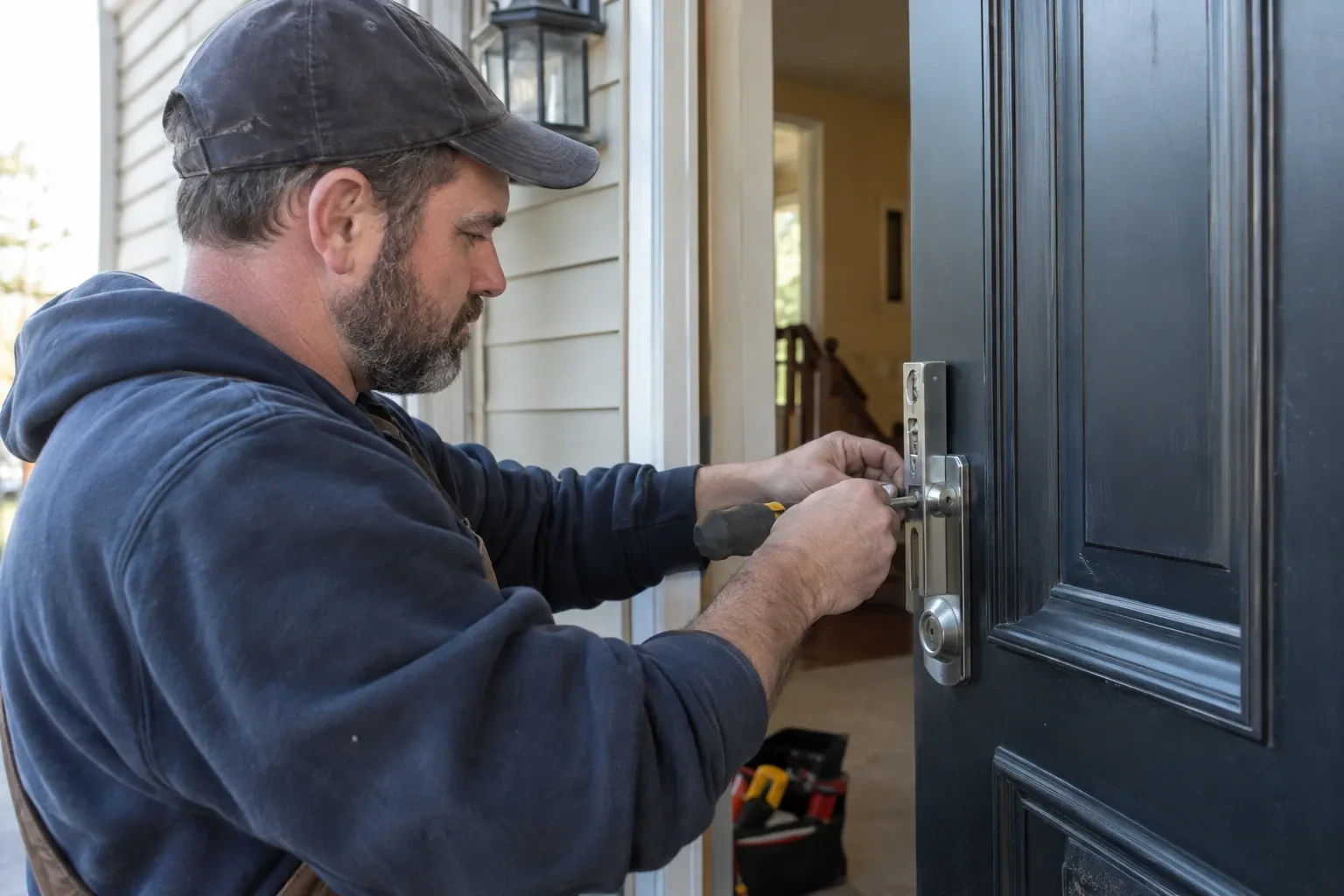
A home lockout service is a visit whose whole purpose is to get you back inside your own home when the door is locked against you. The locksmith first confirms you have the right to be there, usually by matching photo identification to the address or seeing a lease, deed or property-management record. Then the lock is identified and opened with the gentlest method the hardware allows, so the door and the lock itself are usually kept in working order. Once you are inside, any further step such as rekeying or a new cylinder is discussed as its own decision.
Confirming you belong at the door
Before any tool comes out, the locksmith confirms that the person asking for entry has the right to it. Photo identification with the address on it is the simplest route. When the card shows an old address, a lease, a property tax notice, a utility bill on your phone or a call to the property manager fills the gap. If everything that proves it is inside, the locksmith notes that and completes the check once the door is open, before leaving. This is a courtesy to every household on the street as much as to you, and good locksmiths treat it as the first step of the job rather than an obstacle.
Opening a latched knob or lever
When the door has simply latched behind you and the deadbolt was never thrown, the job is often the gentlest one a locksmith does. A spring latch is bevelled so the door can close on it, and without an engaged auxiliary deadlatch that bevel lets a latch tool ease it back without touching the keyed cylinder; a properly engaged deadlatch resists that and needs a different approach. Where the door-frame gap is tight, or a guard plate covers the latch, the locksmith picks the knob cylinder instead, routine work on standard residential hardware. The knob is then checked for a loose spindle or sagging latch, since a door that catches unexpectedly is often telling you the latch is worn.
The missing key is now just a piece of metal
If the cylinder was rekeyed, whoever has the old key is holding something that fits the keyway and turns nothing. You receive the new keys, typically two or three, cut from the fresh pin combination rather than copied from a worn original, so they will operate crisply for years. It is worth counting them, deciding who in the household gets one, and writing down where the spare lives. If several doors were brought onto the same new key, test each one before the locksmith drives off. From this point the lost key is a story to tell, not a worry to carry.